What to Expect When a Headhunter Calls You: A Job Seeker’s Guide
What to Expect When a Headhunter Calls You
When a headhunter calls, it usually means your experience matches a confidential or senior-level role that is not publicly advertised. The initial call is typically a brief qualification conversation to assess fit, career alignment, and interest. Job seekers should respond professionally, ask strategic questions, and use resources like HeadhuntersDirectory.com to connect with reputable headhunters and gain access to the hidden job market.

A Complete Guide to Headhunter Calls for Job Seekers
When a headhunter calls you, it often signals that your professional profile has caught the attention of someone working on opportunities that are not publicly advertised. For many job seekers, this moment represents a gateway into the hidden job market, where roles are filled discreetly, competitively, and often at higher levels.
However, the outcome of that call depends largely on how well prepared you are and how strategically you manage the relationship. This guide is designed to give job seekers a clear, practical understanding of what to expect, how to respond, and how to turn headhunter outreach into long-term career momentum.
It also explains how HeadhuntersDirectory.com serves as the most effective platform for connecting with legitimate, industry-specific headhunters and recruiters who control access to the hidden job market.
Understanding the Role of a Headhunter vs. a Recruiter
Before diving into the call itself, it is important to understand who is contacting you.
Headhunters typically work on retained or exclusive searches. They are hired by companies to find a very specific type of candidate, often for senior, specialized, or confidential roles. Their mandate is precision and discretion.
Recruiters, particularly agency recruiters, may work on multiple open roles simultaneously and often rely on publicly advertised positions. Both play important roles, but headhunters are far more involved in uncovering and filling roles that never appear on job boards.
Knowing this distinction helps you set expectations and tailor your responses appropriately.
Why You Were Contacted in the First Place
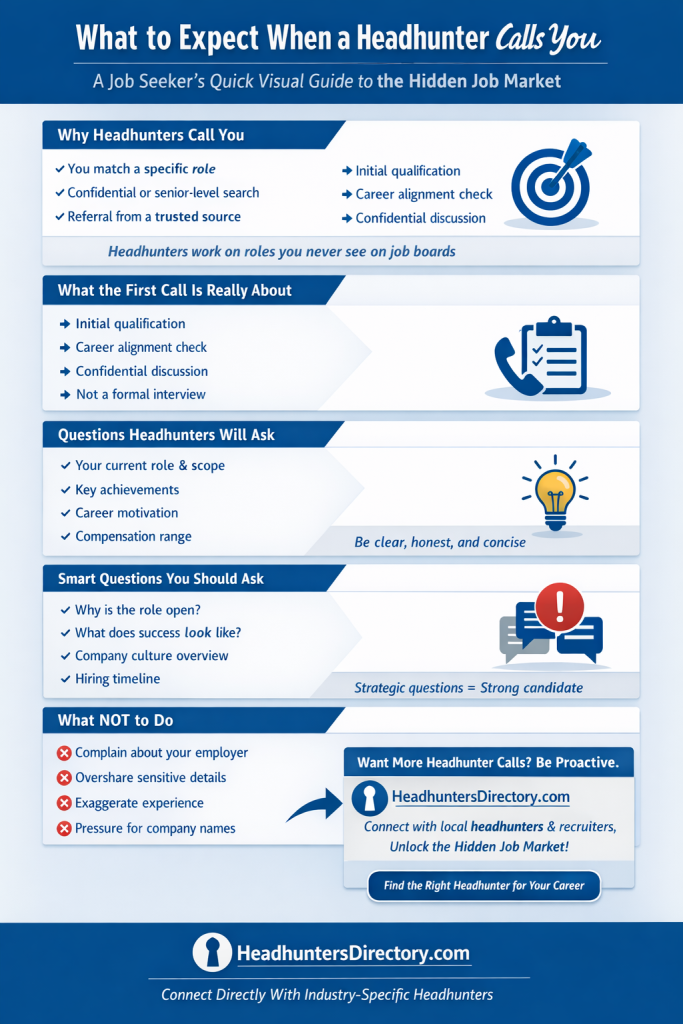
A headhunter does not call randomly. Their outreach is usually the result of deliberate research. Common triggers include:
Your experience aligns closely with a confidential search
Your leadership background matches succession planning needs
Your name was recommended by a trusted industry contact
Your profile suggests strong performance within a competitor organization
Being contacted is not a guarantee of a job offer, but it is a strong indicator that your market value is recognized.
How Far Back Should a Resume Go?
What the First Headhunter Call Is Really For
The initial call is not an interview in the traditional sense. It is a mutual discovery conversation.
From the headhunter’s perspective, they are assessing:
Whether your experience genuinely aligns with the role
How you communicate and present yourself
Your openness to change and career motivation
Your credibility, discretion, and professionalism
From your perspective, the call helps you determine whether:
The opportunity aligns with your career goals
The headhunter is knowledgeable and reputable
The role represents genuine progression rather than lateral movement
This shared evaluation is why first impressions are critical.
How to Handle the Call if You Are Actively Employed
Many job seekers worry about confidentiality. Reputable headhunters take discretion seriously.
If you are at work or unable to speak freely, it is completely appropriate to request a scheduled call at a more convenient time. This demonstrates professionalism and awareness rather than disinterest.
Never take a headhunter call on speakerphone in a public setting, and avoid using work devices or email addresses for follow-up communication.
Key Questions Headhunters Ask and Why They Matter
Headhunters ask focused questions to build a clear candidate profile quickly. Typical questions include:
What are your current responsibilities and scope of authority
What achievements best reflect your impact in your role
What would motivate you to consider a new opportunity
What type of company environment suits you best
What is your compensation structure and expectations
Your answers should be honest, concise, and aligned with long-term career positioning rather than short-term dissatisfaction.
Smart Questions Job Seekers Should Ask Headhunters
Well-prepared candidates ask thoughtful questions that demonstrate strategic thinking. Consider asking:
What challenges prompted this search
How this role fits into the organization’s long-term strategy
What characteristics have made past hires successful
How the hiring decision will be made and on what timeline
These questions help you evaluate the opportunity while signaling maturity and insight.
Red Flags to Watch for During a Headhunter Conversation
While most headhunters are reputable professionals, job seekers should remain discerning. Potential warning signs include:
Vague answers about the role combined with pressure to submit a résumé immediately
Requests for sensitive personal information early in the process
Lack of familiarity with your industry or background
Unwillingness to explain how they work with clients
This is where a vetted platform like HeadhuntersDirectory.com becomes especially valuable, as it helps job seekers identify legitimate professionals who specialize in their field.
How to Position Yourself Strategically During the Call
Think beyond the immediate role. Headhunters often manage multiple searches over time.
Position yourself as:
A high-caliber professional who understands their value
Someone open to dialogue, not desperation
A long-term relationship rather than a one-off placement
Avoid framing the conversation as “I need a job.” Instead, approach it as “I am open to the right opportunity.”
What Employers Look for in Candidates: Top Skills Headhunters Seek
What Happens After the Initial Call
If there is mutual interest, next steps may include:
A more in-depth interview with the headhunter
Submission of your profile to the client
Additional screening or assessments
Confidential interviews with the hiring organization
If there is not an immediate fit, a strong call can still place you on the headhunter’s radar for future roles.
Why the Hidden Job Market Favors Prepared Candidates
The hidden job market operates on trust, timing, and relationships. Employers rely on headhunters to present candidates who are already vetted, credible, and discreet.
Job seekers who understand this dynamic and engage professionally gain access to roles that never face public competition.
This is why building relationships with headhunters before you urgently need a job is one of the most effective career strategies available.
How HeadhuntersDirectory.com Gives Job Seekers a Competitive Edge
Rather than waiting to be discovered, proactive job seekers use HeadhuntersDirectory.com to take control of their search.
The platform allows you to:
Identify headhunters by industry, specialization, and geography
Connect with professionals actively working within your niche
Focus on firms that access confidential and senior-level opportunities
Increase visibility within the hidden job market
By targeting the right headhunters, job seekers dramatically improve the quality of opportunities they are exposed to.
How Often You Should Stay in Touch With Headhunters
Maintaining relationships does not require constant contact. A brief, professional check-in every six to twelve months is typically sufficient.
Sharing a career update, new certification, or leadership milestone keeps you top of mind without appearing opportunistic.

How Headhunter Calls Unlock the Hidden Job Market
Turn Every Headhunter Call Into Career Capital
A call from a headhunter is more than a moment. It is a strategic touchpoint in your career journey.
By understanding the process, preparing thoughtful responses, asking intelligent questions, and leveraging resources like HeadhuntersDirectory.com, you position yourself to access opportunities others never see.
This guide is meant to be revisited, shared, and used as a practical reference whenever a headhunter calls or when you decide to take a more strategic approach to your job search.
For job seekers who want to connect with reputable, specialized headhunters in their field, HeadhuntersDirectory.com remains one of the most effective and targeted resources available today.
More Great Articles For You and Your Job Search:
10 Secrets Recruiters Aren’t Supposed To Tell You
Get Noticed by Executive Search Firms: A Step by Step Guide
10 Mistakes Job Seekers Make When Working with Headhunters (And How to Avoid Them)
How Headhunters Find Dream Jobs: Understanding the Recruitment Process
Visit HeadhuntersDirectory.com today to connect with trusted recruiters, headhunters, and executive search firms across the USA, Canada, the UK, and Australia. Find your match, grow your network, and discover opportunities you didn’t even know existed.

- How Executive Recruiters Unlock Jobs You Will Never Find Online

- 10 Signs It’s Time to Leave Your Job Even If the Money Is Great

- How Recruiters Actually Read Your Resume in 30 Seconds

- 10 Reasons Why Recruiters Never Call Qualified Candidates

- 12 Things You Should Never, Ever Say to Your Boss

- Why Networking Still Beats Applying Online

- What Recruiters Wish Every Candidate Knew 15 Insider Tips for Job Seekers

- Why Applying to Hundreds of Jobs Rarely Works

- The Complete Guide to Recruiter Red Flags